We’ve all been in that situation. You promise yourself that this time will be different when you buy the yoga mat and download the app. In your living room, you’re going to get ripped.
Two weeks later? Your thumb scrolling through Instagram is the only thing getting a workout. That mat is just sitting there under the couch.
Your willpower isn’t the problem. Regular home workouts can be lonely, perplexing, and, to be honest, a little monotonous. No one is telling you that your squat form is bad. No one will yell at you if you stop five seconds early.
The AI personal trainer for home fitness is here.
It’s not just about cool devices or mirrors that cost a lot of money. This changes the way we think about health at its core. I want to get to the bottom of this. We’re going to talk about how smart technology is really changing the game, improving your form, and most importantly, keeping you from quitting.
We shall answer the important question: Is it possible for a robot to take the position of a human coach? Or is this simply another craze that will go away like the ThighMaster?
What Is an AI Fitness Assistant?
We need to be clear about what we’re talking about before we dispute about whether it’s better than a person. When I say “AI Personal Assistant for Home Fitness,” I don’t mean a YouTube video that plays over and over again.
I’m talking about technology that is smart and can respond.
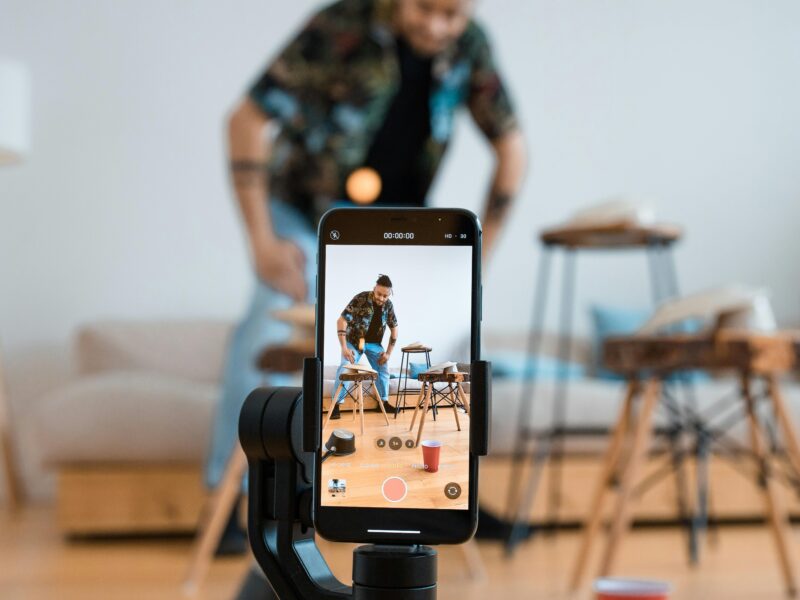
These systems “see” you using machine learning and computer vision. They keep an eye on your skeleton using the camera on your phone, TV, or a special device like a smart mirror. They make a map of your joints in real time.
Look at it this way:
- Old School: You watch a trainer on a screen and then try to do what they do. You don’t know if you’re doing it right.
- The screen observes you in the AI Era. It can tell whether your knees are giving in. It keeps track of how many reps you do. It recognizes you had a hard time with the last set of pushups and will automatically drop the weight for the following one.
You and the machine talk to each other. And that makes everything different.
The Three Parts of AI Fitness
- Motion Tracking: Watching where your body is via cameras or sensors.
- Algorithmic Programming: Making a training schedule that adjusts depending on how well you do.
- Feedback in Real Time: Sounds or sights that correct you right away.
How Can Computer Vision Help Your Back?
This is the part that really impresses me. Injuries have always been the main risk of working out at home. You load up a barbell or pick up heavy dumbbells, your form breaks down, and your lower back snaps.
We call this “real-time form correction,” and smart tech can remedy it.
I recently used a well-known software that tracks movements. I was performing a plank. I believed I was as flat as a board. “Lower your hips,” the AI voice said right away. I saw the response on the screen, and sure enough, my hips were way too high.
How does it work?
The AI makes a map of your body points, like your shoulders, hips, knees, and ankles. It looks at how your geometry compares to a “perfect” representation of the activity. It warns you if the deviation is too high.
- Injury Prevention: It stops you from becoming hurt.
- Muscle Activation: If you do the move well, you will actually work the muscle you want to increase.
- Confidence: You don’t have to guess anymore. You know you’re doing it right.
Note: Even the top medical authorities on sports safety stress that using the right technique is very important for avoiding long-term injuries. AI is basically making safety automatic.
The End of One-Size-Fits-All Plans: Hyper-Personalization
This is when I start to criticize standard fitness applications. A lot of them don’t move. They provide you with a PDF that is 12 weeks long and say, “Good luck.”
But you are not a PDF file. Some nights you don’t sleep well. You feel strong on some days. Your shoulder hurts some days.
A real AI personal trainer for home exercise works like a smart brain. It uses data to change today’s workout.
The “Smart Weight” Change
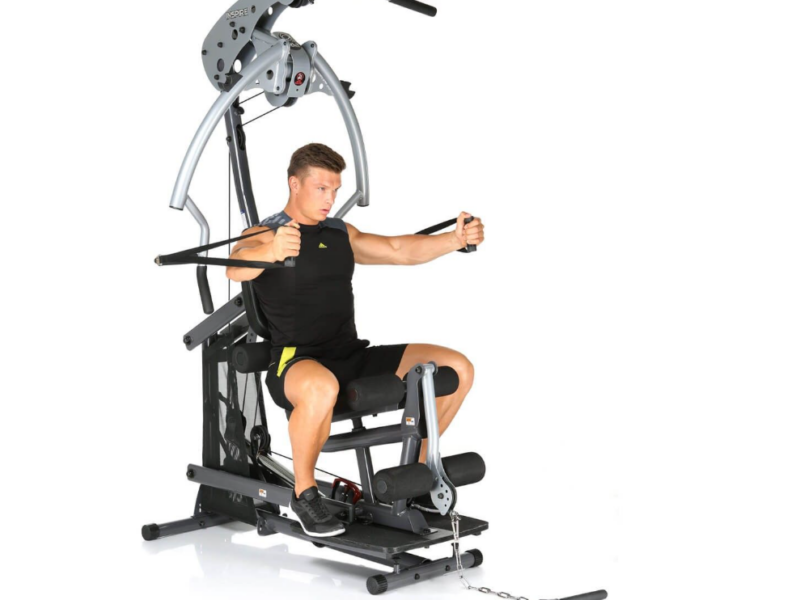
Digital weight is now used in several high-end products. There are no plates made of metal. The gadget works by using magnetic resistance. The AI may modify the weight during the rep because it is digital.
If it thinks you’re about to fail halfway up, it instantly takes 5 pounds off the burden so you can finish the rep. Even a human spotter has a hard time doing this smoothly.
Training Based on Recovery
The top AI systems can now work with your wearable electronics, such as an Apple Watch or Whoop.
- Your watch shows you only got 4 hours of sleep.
- The AI Response: It looks at that data. It cancels the high-intensity interval training (HIIT) session that was supposed to happen today. Instead, it proposes a mild strength or mobility flow session.
This is a big deal. It keeps you from becoming burned out. It keeps you on track by meeting you where you are that day.
Getting Your Brain to Work Hard
Let’s chat about what drives us. Why do we scroll TikTok for hours but struggle to do 20 minutes of cardio? One gives us dopamine right away, and the other makes us sweat.
Smart workout technology is using psychology against your sloth.
The Effect of the Leaderboard
A lot of AI platforms put you on a live leaderboard. You’re not simply running; you’re chasing “User123” from Ohio. It gets that competitive instinct going.
Seeing Success
I saw a system not too long ago that shows how much influence you have as a representative. A bar on the screen fills up as you push. If you don’t work hard, the bar stays low. You push harder without even thinking about it to see the bar touch the top. Your body is the controller for this video game.
Why this matters:
- It distracts you from the pain of physical exertion.
- It creates a “flow state” where time passes faster.
- It builds a habit loop: Action -> Reward (high score) -> Repeat.
AI vs. Human Fitness Coach
Now comes the bit that people disagree with. Is the AI home fitness assistant better than having a real person next to you?
I’m going to be honest. Yes and No.
Where AI Wins?
- Cost: A good personal trainer costs $50 to $150 per hour. An AI app might cost $15 to $40 per month. The math is simple.
- Availability: The AI is ready at 4:00 AM or 11:00 PM. It never cancels on you. It never has a bad day.
- Data Crunching: A human trainer can’t remember the exact tempo of your 3rd rep on your 2nd set from three weeks ago. The AI remembers everything.
Where Humans Win?
- Empathy: An AI cannot look in your eyes and see that you are emotionally drained. It can read heart rate, but it can’t read sadness or stress in the same way.
- Tactile Correction: Sometimes you need someone to move your elbow into the right spot physically. A camera can only tell you; it can’t move you.
- The “Fear” Factor: Let’s be real. We work harder when a human is watching because we don’t want to disappoint them. It is harder to disappoint a microchip.
My Verdict: AI is better for the average person who wants to keep active, lose weight, and grow muscle at home because it is easier and cheaper. Humans are still the best for elite athletes or persons with significant ailments.
Best Things to Look for in 2026
Don’t just believe the buzz if you’re looking for smart home gym tech. Check for these exact qualities. It’s just a fancy TV screen if it doesn’t have these.
1. Counting Reps
It’s not clever to have to tap the screen by hand to signify you’ve finished a set. The camera should do the counting for you. This lets you keep your hands free and your mind on the iron.
2. Algorithms for Progressive Overload
This is the key to building muscle. The system needs to tell you to add weight or reps over time. You won’t get much better if you do the same routine for six months. The AI should drive this progress.
3. Sound Feedback
You can’t always see the screen, like when you’re doing a downward dog or a bench press. You need to talk to the system. “Knees out,” “Chest up,” and “Slower on the way down.”
4. Putting things together
Does it talk to your watch? Does it work with your nutrition app? A connected fitness environment is the finest one.
Research Insight: Studies repeatedly demonstrate that wearable technology combined with Feedback markedly enhances physical activity levels in comparison to conventional tracking methods.
The Future: What Happens Next?
We are only beginning to understand. The next generation of technology is wild, and I’m looking at it.
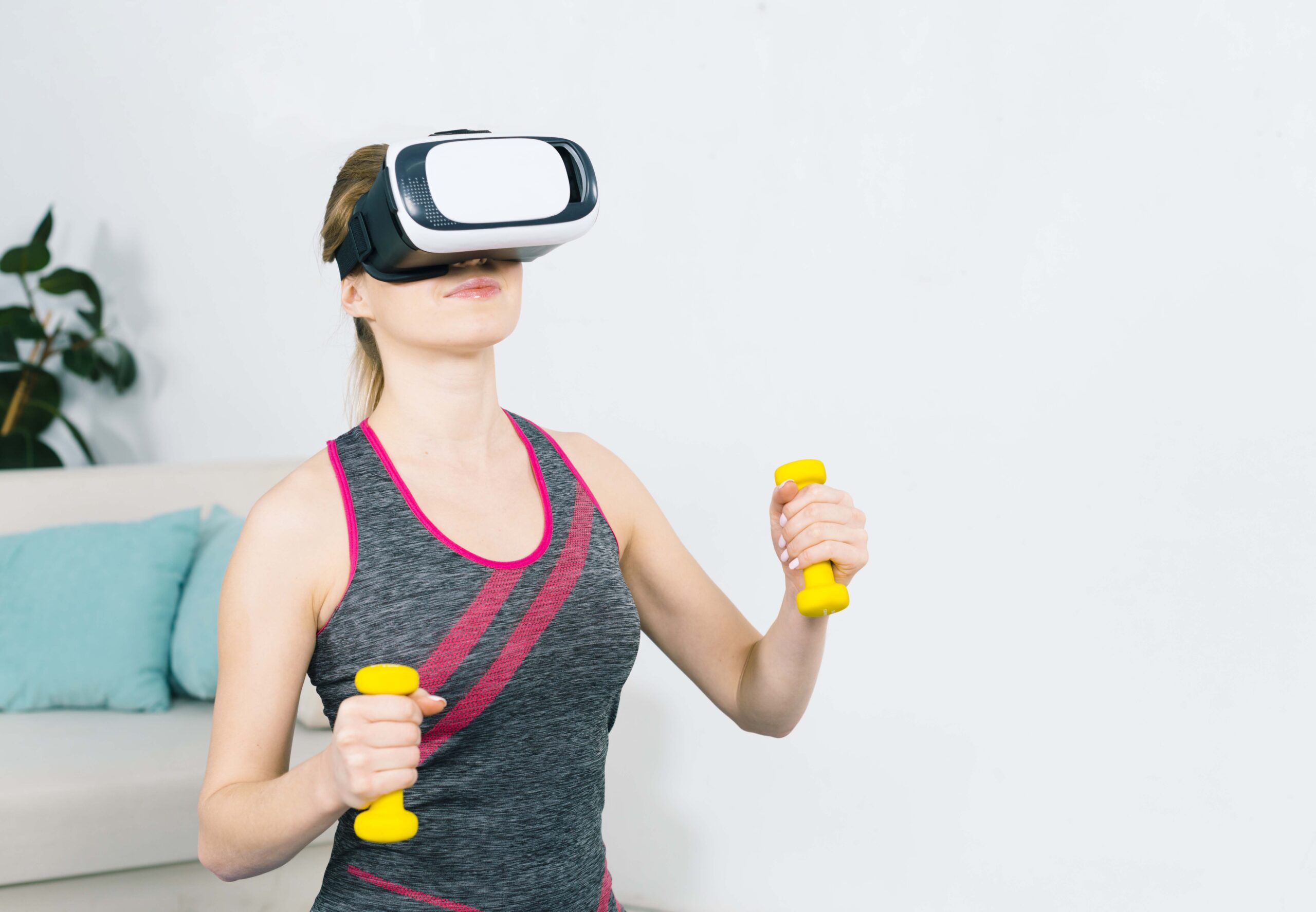
We are getting closer to Holographic Coaching. Imagine putting on AR glasses and seeing a 3D ghost of a trainer in your living room. You may walk around them. They show you how to do a lunge right next to your coffee table.
Biometric Prediction is another something we are seeing. AI that can tell you’re about to get sick two days before you feel sick based on small changes in your movement and heart rate variability. It then adapts your workout to boost your immune system instead of stressing your body.
The distinction between a “home gym” and a “high-tech lab” is getting less clear.
Final Thoughts: Is It Worth the Hype?
I have tried out a lot of gadgets. I have seen trends come and go. But the AI personal trainer for home workouts isn’t a scam.
The most challenging aspect of getting fit isn’t lifting weights. It’s the making of choices. What should I do today? How heavy? Am I doing this right?
AI takes away the stress of making decisions. It takes the thinking out of the equation so you can focus on what you need to do.
If you have trouble sticking to a routine or are tired of not knowing if your home exercises are working, this technology is the answer. It delivers the knowledge of a top-level coach into your home for a lot less money.
Common Questions
Do I need a lot of room for an AI fitness setup?
Not really. Most computer vision apps only need you to be 6 to 7 feet away from the camera to see your whole body. You can fit AI into your space if you can fit a yoga mat.
Is it safe for people who are new to it?
It is safer for novices than doing it alone. The rapid Feedback on form stops beginners from picking up undesirable habits in their first year.
Does it help you lose weight?
Yes, but keep in mind that technology is just a tool. AI can help you burn more calories and create more muscle, but you still have to put in the effort and eat well. The robot can’t eat your salad for you.