
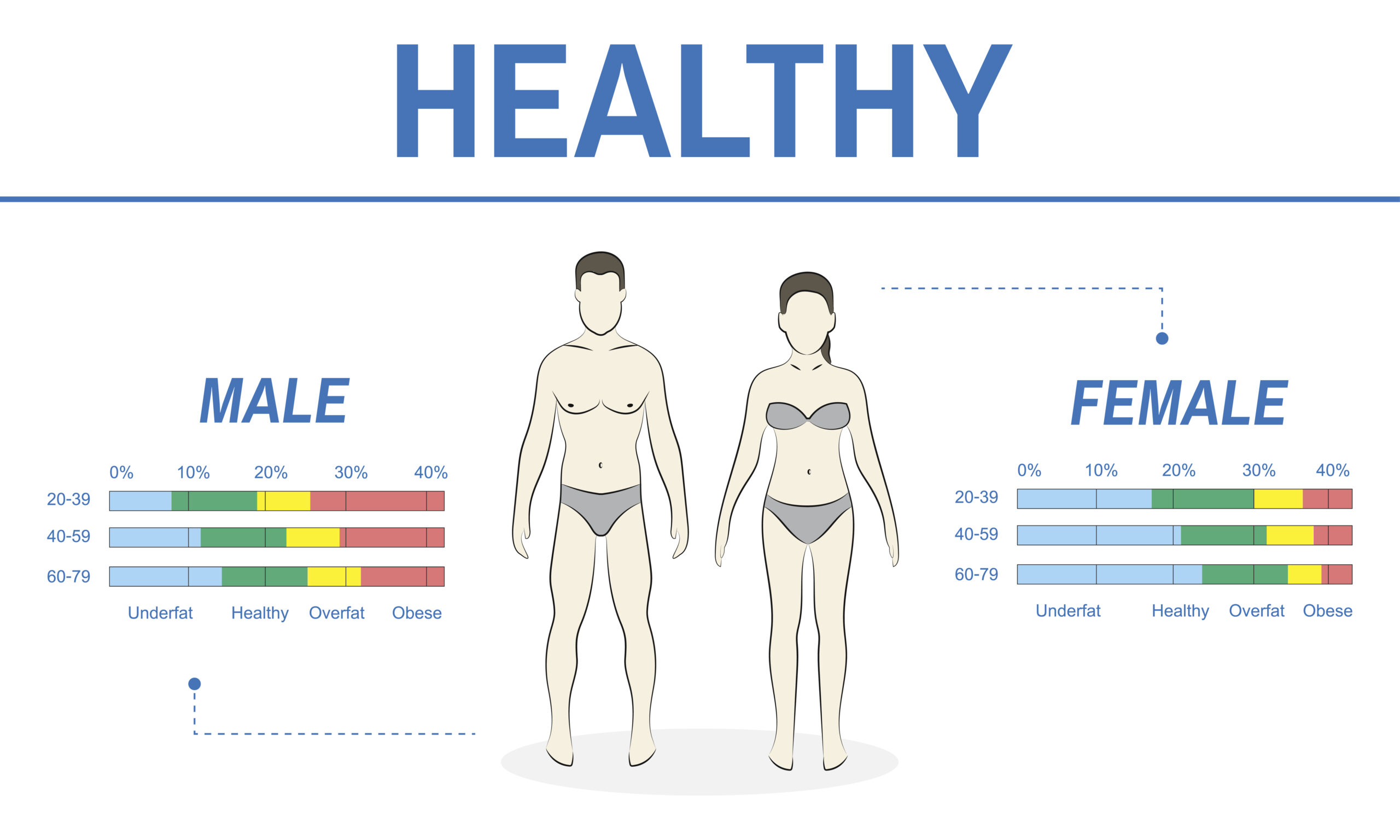
The reason the scale is deceiving you needs to be discussed seriously. The complete narrative is not told by it. It doesn’t reveal the location of that weight.
The major query, “What is the Best Body Composition Method for Measuring Weight Distribution Around the Middle?” is addressed in this article.
We will forego the costly medical examinations that no one has time for. We’ll examine realistic, precise methods for you to monitor this at home.
In actuality, where you store your fat is more important than your weight. The harmful stuff is visceral fat, which is the fat in the middle. It’s the kind that tampers with your hormones and heart.
Why “Weight Distribution” Matters More Than Weight?
You must comprehend the stakes before we discuss the instruments.
The majority of the weight you carry in your thighs or hips is stored energy. Sure, it irritates you, but it’s not actively attempting to murder you.
The midsection has a different weight. This tissue is metabolically active. It surrounds your pancreas and liver.
Like an organ, visceral fat releases chemicals that cause inflammation.
Insulin blockage is a quick route to type 2 diabetes.
It exerts physical strain on your organs, which stresses the heart.
In the past, doctors just used BMI. We now know that a person’s BMI is essentially meaningless. Muscle is not taken into consideration, and it most certainly does not measure distribution.
According to a scale, you can have “normal weight” but have dangerously high levels of abdominal fat. They refer to this as “skinny fat,” while TOFI (Thin Outside, Fat Inside) is the medical name.
Therefore, the most crucial health indicator you can monitor is determining the Best Body Composition Method for Measuring Weight Distribution Around the Middle.
The Candidates: Comparing the Methods
Let’s look at the options on the table. We have the high-tech stuff, the gym gadgets, and the old-school tools.
1. The DEXA Scan (The Expensive Pro)
This is the gold standard. It uses X-rays to map out bone, fat, and muscle. It tells you exactly how much fat is in your trunk versus your legs.
Pros:
- Extremely accurate.
- Shows visceral vs. subcutaneous fat.
Cons:
- It costs money (usually $100+ per scan).
- You expose yourself to low-level radiation.
- It is not practical for weekly tracking.
2. Bioelectrical Impedance (Smart Scales)
You may have one of these. You stand on the metal pads, and it sends a tiny electrical signal through your feet.
Pros:
- Fast and easy.
- Cheap and accessible at home.
Cons:
- Highly inaccurate for “distribution.”
- The signal often takes the path of least resistance (up one leg, down the other). It often misses the torso entirely unless it has hand sensors too.
- Hydration levels mess up the results. Drink a glass of water, and your body fat % changes.
3. The Tape Measure (The Old Reliable)
It seems too simple to be true. But sometimes, the low-tech solution is the best one.
Pros:
- Cheap.
- Directly measures the area in question.
- No technology is malfunctioning.
Cons:
- Human error (pulling too tight).
- Inconsistent placement.
So, which one wins?
The Verdict: The Waist-to-Hip Ratio (WHR)
The Waist-to-Hip Ratio (WHR) is the best way to measure how much weight is distributed around the middle of the body.
Don’t worry about the expensive machines. This easy math problem will offer you the best idea of how your fat storage affects your health risk.
Why does this win? Because it gives background.
Having a big waist is terrible. A big waist on a big body is not the same as a big waist on a tiny frame with narrow hips. The ratio shows the “apple” shape right away.
This measure is better than BMI at predicting the risk of heart disease for medical organizations like the World Health Organization.
How to Measure WHR Correctly?
You can’t just slap the tape around your belly button. Precision matters here.
Step 1: Get the Waist Number
- Stand up straight and breathe out naturally. Don’t suck it in.
- Find the narrowest part of your waist. This is usually just above the belly button.
- Keep the tape parallel to the floor.
- Record the number (e.g., 34 inches).
Step 2: Get the Hip Number
- Stand with your heels together.
- Measure around the widest part of your buttocks and hips.
- Keep the tape snug but not digging into the skin.
- Record the number (e.g., 40 inches).
Step 3: The Math
- Divide your Waist size by your Hip size.
- Calculation: 34 ÷ 40 = 0.85.
What the Numbers Mean
This is where the rubber meets the road. According to health standards, here is where you want to be:
For Men:
- 0.95 or lower: Low health risk (Pear shape).
- 0.96 to 1.0: Moderate risk (Avocado shape).
- 1.0 or higher: High risk (Apple shape).
For Women:
- 0.80 or lower: Low health risk.
- 0.81 to 0.85: Moderate risk.
- 0.85 or higher: High risk.
If your number is in the high-risk zone, it means your weight distribution is centered around the middle. This is your red flag to change your nutrition and training.
The Runner Up: Waist-to-Height Ratio (WHtR)
If the hip measurement is too tricky to get right by yourself, there is a solid alternative.
The Waist-to-Height Ratio is gaining popularity among researchers. It is even simpler than the hip ratio.
The Rule of Thumb:
Your waist circumference should be less than half your height.
If you are 6 feet tall (72 inches), your waist should be under 36 inches. Period.
Why this works:
- It accounts for body frame size via height.
- It is incredibly easy to remember.
- It specifically targets central obesity.
A study published in the Journal of Clinical Endocrinology & Metabolism suggests this might be superior to BMI for predicting heart attacks.
If you want a quick “sanity check” on your physique, use this method.
Why Smart Scales Fail at “Distribution”?
I constantly notice this. People fear when they purchase a $30 scale on Amazon because it indicates that their visceral fat has increased overnight.
Let’s face it, these devices operate like this. They make use of power. Muscle is a good electrical conductor and contains water. Fat resists electricity and has a lower water content.
The scale uses an algorithm to guess the remaining values after measuring the resistance.
The middle’s issue:
Footpads are all that most home scales have. The electrical current flows down your left leg and up your right. It hardly makes it through your abdomen.
Based on your leg fat, the scale is actually estimating your belly fat.
A smart scale will indicate that you are slender if you have skinny legs and a large belly (the so-called “beer belly” build). It’s just incorrect.
The scale is not reliable for measuring weight distribution around the middle unless you use a medical-grade InBody equipment with handle sensors. Instead, have faith in the tape measure.
How to Track Progress Without Going Crazy?
Data is useless if it isn’t consistent.
I have seen people measure themselves after a cheat meal and get depressed. Or measure themselves post-workout when they are dehydrated.
Here is the protocol for accurate tracking.
1. Timing is Everything
Always measure in the morning.
- After you use the bathroom.
- Before you eat or drink anything.
- Before you work out.
This is your “dry weight” and your true shape. Later in the day, you have food in your stomach and inflammation from the day. You will be bloated. Don’t measure bloat.
2. Frequency
Do not do this every day. You will drive yourself up the wall.
Body composition changes slowly. The fat around the middle is often the last to go (stubborn fat).
Measure your Waist-to-Hip ratio once a week. Pick a day. Friday mornings are usually good because you haven’t had a “cheat weekend” yet.
3. The Mirror and Photos
Numbers are great, but visuals don’t lie.
Take a photo from the front and the side every month. Sometimes the tape measure doesn’t move, but the composition changes. You might be losing visceral fat (the hard stuff inside) while the subcutaneous fat (the soft stuff under the skin) stays the same for a while.
Photos capture the tightening of the midsection better than any number.
Common Mistakes That Ruin Your Data
Using a measuring tape is idiot-proof. It isn’t.
Mistake 1: Pulling too tight.
We all want the number to be smaller. It is tempting to pull the tape until it digs in. Don’t do it. The tape should sit on top of the skin without compressing it.
Mistake 2: Wrong placement.
Some people measure their “pant waist.” Your pant waist is usually lower than your actual anatomical waist. If you measure your hips, you are missing the visceral fat area. Measure the navel or slightly above.
Mistake 3: Measuring over clothes.
Even a thin t-shirt adds half an inch. Measure on bare skin.
Mistake 4: Posture.
Slouching pushes your belly out. Standing as a soldier sucks it in. Stand naturally. Relax your shoulders.
The Role of Visceral Fat
We need to touch on why we are doing this again.
Visceral fat is not just “extra energy.” It is an active biological tissue. It releases cytokines. These are proteins that trigger inflammation throughout the body.
When you use the Best Body Composition Method for Measuring Weight Distribution Around the Middle, you are monitoring your inflammation levels.
If that waist number goes down, your risk for almost every major modern disease goes down with it.
- Heart Disease: Reduced strain on arteries.
- Diabetes: Improved insulin sensitivity.
- Sleep Apnea: Less weight pressing on the diaphragm.
This is why doctors are moving away from the scale. A linebacker might weigh 250lbs but have a tiny waist. He is healthy. A sedentary office worker might weigh 170lbs but have a 40-inch waist. He is in the danger zone.
Frequently Asked Questions
Can I pinch my fat?
That helps with subcutaneous fat (the pinchable stuff). It does not measure visceral fat (the hard stuff underneath the muscle). Calipers are great for bodybuilders, but they are bad for measuring health risk around the middle.
Does bloating affect the measurement?
Yes, absolutely. That is why we measure first thing in the morning. If you measure after a pizza dinner, you are measuring gas and water retention, not fat.
My weight is the same, but my waist is smaller. What gives?
This is the holy grail. It’s called body recomposition. You are building muscle and losing fat at the same time. This is why the tape measure is king. The scale would tell you that you “failed.” The tape tells you that you are winning.
How fast can I change the ratio?
It depends. Visceral fat actually burns off faster than thigh fat because it is metabolically active. With a clean diet and solid exercise plan, you can see changes in your waist measurement within 2-3 weeks, even if the scale is stubborn.