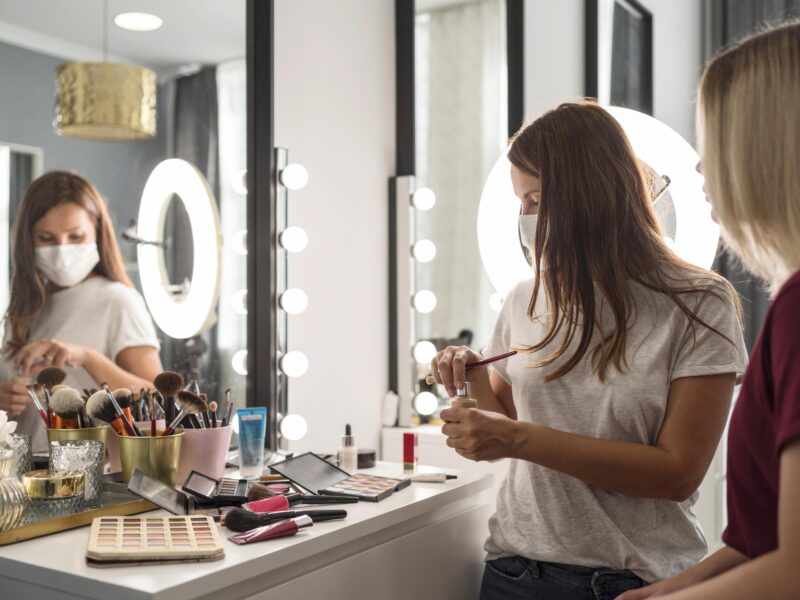

We’ve all been there. You’re in the middle of the makeup area and looking at forty different bottles that all look the same.
You pick one that looks “close enough,” put it on at home, and come back. All of a sudden, you look like you just got a bad spray tan or saw a ghost.
It might be the most challenging part of any beauty routine to find the right match. No longer is it just about light or dark; now it’s also about colors, oxidation, and lighting.
It’s time to stop spending money on bottles that sit in your drawer and get dirty. You’ve come to the right place. We’re going to show you how to pick the right foundation color without a lot of trouble.
Why You Keep Getting It Wrong?
A lot of people think that matching makeup is just about finding the right color for their skin tone. That’s the first mistake.
Because you wash and scrub your face more often, it is lighter than the rest of your body. You get a “floating head” effect if you match your face perfectly.
The goal is to make your face and neck look more connected. You want your face to look smooth, like you’re not wearing a mask.
Now let’s get down to the specifics of how to do this.
Find your skin’s undertone (the first and most crucial step)
This changes everything. It’s possible to have the correct depth (light/dark) but the wrong undertone, which makes it look terrible.
Think about it this way: the sun changes the color of your skin, but your undertone doesn’t. That’s the color below the top.
There are three main groups you need to know about:
- Cool: Your colors are pink, red, or blue.
- Warm: Your color is yellow, peach, or gold.
- Neutral: Your skin tone is neither too pink nor too yellow; it’s just the right color for you.
The Vein Test
This trick has been used for a long time and still works. Turn your hand over and look at your veins in the sun.
- If you have blue or purple veins, it means you are probably cool.
- If you have green or olive veins, you are probably warm.
- Blue-Green Mix: You may be neutral.
You are likely neutral if you can’t tell at all. I’m glad this helped you with your shopping.
The Jewelry Test
What metal makes your skin shine? What I want to know is not which one you like better, but which one looks better on your face.
- When it comes to cool tones, silver jewelry looks best.
- Jewelry made of gold looks best on warm skin tones.
- You are Neutral! Both of them look good.
The White T-Shirt Test
Place a white piece of cloth in front of your face that isn’t made up.
- You are Cool if your skin looks red or pink next to the white.
- You are Warm if your face looks yellow or dull.
- If you look gray or just “tan,” you may have olive highlights, which are neutral/warm.
The Healthline article on skin hues is a great way to learn more about color theory.
Match the formula to the type of skin you have
You can’t just choose a color without thinking about the feel. It changes the way the color looks on your face.
It’s more likely for a matte makeup to dry darker than a dewy one. Here’s how to choose based on the type of skin you have.
Skin That Gets Oily
- You need a matte or soft-matte finish if your face wipes off makeup by noon.
- Look for liquid or powder makeup that doesn’t have oil and lasts a long time.
- Because they mix with your natural oils, these products tend to oxidize (turn orange) more.
Tip: If you know your skin is very oily, always go half a shade lighter.
Dry skin
- Heavy powders should not be used if your skin feels tight or has dry spots.
- Do not use anything else but hydrating liquids, stick foundations, or tinted creams.
- For some reason, these products can make the shade look lighter than it really is.
To keep the color from sticking to dry spots, you need to add water.
Combination Skin
The skin type that is hardest to understand. Your T-zone is oily, but your cheeks are dry.
- The best finish for this is a satin one.
- They’re not too flat, but they’re also not a grease ball either.
- Instead of just using foundation, you can mix and match layers to get the look you want.
Read WebMD’s guide on how to figure out what type of skin you have if you’re not sure.
How to Do It Right When Testing Swatches?
Please, for the love of all that is holy, don’t test the foundation on your hand.
The color of your hand is different from the color of your face. It normally has a totally different texture because it gets a lot more sun.
The Rule of Jawline
- Your neck is the only place you should wear a watch.
- Make a line with the makeup going from your cheek to your neck.
- You want to see how it links the two places.
The right color should almost disappear. It’s a winner if you have to strain your eyes to see where you put it.
The Three-Stripe Method
Don’t try out just one color. It’s all in your eyes.
- Pick the color you think fits you.
- Choose a lighter color.
- Go with a darker color.
- Put them next to each other on your chin and swipe.
Often, the one you thought was great isn’t, and one of the neighbors is a better fit.
Lighting Is Important (Don’t Believe the Store)
The lighting in department stores is famously bad. It is bright, makes you look bad, and changes the color.
Do not buy the bottle right away. Put the piece of paint on your face and go outside.
Use the camera on your phone or the rearview mirror of your car to get a better look. In the parking lot, something that looked great inside Sephora might look very orange.
How to Handle Oxidation?
When you put on foundation, and it looks great at first, but after two hours, you look like a pumpkin? We call that oxidation.
- The color changes when it comes in contact with air and the acid in your skin’s natural oils.
- People who have thick skin are most likely to use it.
The Fix: If you love a foundation but it turns brown, get a lighter shade of it.
Before you buy, put the swatch on your chin and leave it there for at least 10 minutes. Let it “cook” for a while to see the real color when it’s dry.
Getting ready for the season
The hard truth is that you don’t stay the same color all year.
If you don’t live in a cave, your skin color changes from summer to winter.
The Shade of Summer
It gets warmer and darker outside in the summer. You might need a color that is darker and has more golden tints.
Don’t add too much bronzer to your winter makeup to make it work. It looks dirty.
The Shade of Winter
Your tan goes away, and you get paler in the winter. The shade you choose for summer will look like a dark mask.
The Trick for Mixing
You don’t always have to spend a lot of money on two expensive drinks.
- Get your “real” winter warmth.
- Get a cheap darker mixer or color drops.
- During the months between spring and fall, add a small amount of the dark foundation to your light foundation to make your own unique shade in the middle.
Have you thought about “color correcting” foundations?
Sometimes, matching your skin tone too closely brings out flaws you want to hide.
If your skin is very red because of Rosacea or pimples, a cool-toned foundation might make the pink look even worse.
- The Plan: To get rid of the redness, use a makeup with a warm yellow undertone.
- Be careful not to get too yellow, or you’ll look jaundiced. A lot is going on.
On the other hand, if you look really dull and tired, a foundation with a peachy or pink tone can make your skin look better.
The Tools of the Trade
You won’t believe it, but the tool you use changes the color.
- Sponges, also called “Beauty Blenders,” soak up and remove dirt and oil. Plus, they make the makeup look more like skin. This is great if your color is a little off because it makes it match better.
- Brushes: Dense brushes put on a lot of color. They hide more, but if you don’t match the color, it can be very obvious.
- Fingers: The item melts in your hands because they are warm. For natural finishes, it works well, but it can get messy.
What Not to Do: Common Mistakes
We’ve talked about a lot, but now let’s look at the things that people often do wrong.
Not Seeing the Neck
No one needs to be told that you are wearing makeup if your face looks great, but your neck is three shades lighter.
If your neck is pale, choose a makeup that matches your neck instead of your face. Then, add depth to your face by putting powder around the edges.
Not Doing Research Before Buying Online
It’s like playing Russian Roulette when you buy foundation online.
Use matched tools like “Findation” or similar if you have to shop online. These let you plug in shades that you already know look good on you.
Don’t believe the pictures of models on the page. They have a lot of Photoshop on them. Read reviews or watch YouTube videos of people with the same skin tone as you trying it on.
When You Stick to One Brand?
You are not always “Beige 3” in different brands.
No one color chart works for everyone. In MAC and Fenty, a “Neutral” is not the same thing. Every time you switch brands, you have to test.
In conclusion
It’s not hard to learn how to pick the right makeup shade, but you have to be patient.
No more guesses. Use the vein or ring test to find out what your undertone is. Your whole look is built on top of it (no pun meant).
Test it on your chin first, then go outside into natural light and wait for it to dry.
Your skin is different. It should have a match that brings out its best, not one that hides it.
Once you get this right, your blush, bronzer, and highlighter will all look so much better.