I wanted to share this advice right away after seeing someone lose a ring at the gym again, but I waited until today because we talked about how long workout gear lasts earlier this week.
We will also discuss the “Fitness Factor,” the most common mistakes people make while measuring, and the unique features of silicone rings, such as who wears them, why, and how the sizes are different from metal rings.
The Real Story Behind “Standard” Sizes
Every time someone buys a ring online, they ask the same question. Brands, jewelers, and influencers all agree that size is the same. But is a size 9 really a size 9 everywhere? Has the industry lost its ability to be consistent?
I think ring sizing is a little bit like the Wild West. Why? Here’s the easiest proof I can provide you.
I tried on three different rings from three different top-tier sports brands yesterday. They all had size 10 labels on them. One dropped off as I shook my hand, one cut off my blood flow, and one fit.
We may agree with the charts, disagree with them, or attack the companies that made them. I am going to condemn myself. Don’t let yourself think that buying something online is easy without doing some research first.
Return policies are unfair, and marketing is too much, but establishing your baseline measurement is still the most important thing you can do.
You can change it. Anyone active, no matter what sport they play, wants a ring that stays on during a deadlift yet doesn’t strangle their finger as they run.
Why the “Fitness-Friendly” Size is Different?
Let’s start with a key axis: the way your hand works. Most general manuals don’t mention this, but for us—people who move—it affects everything.
The Swell Factor:
Your finger size might stay the same. No, it’s not. If you measure your finger first thing in the morning while it’s chilly, you’re going to fail.
Your heart rate goes up when you work out. The heart pumps blood. Your hands and feet swell. At 8:00 AM, a ring that fits wonderfully could feel like a tourniquet by the time you finish your third round of pull-ups.
The Problem with Knuckles:
Some of us have knuckles that are a lot bigger than the base of our fingers. You might get a reasonable fit at the base, but good luck getting it past the bone if you measure that.
You need a size that fits over the knuckle with some resistance, but doesn’t spin easily at the base. It’s a balancing act.
Method 1: The Paper Strip (My Favorite Way)
A lot of folks say to use a piece of string. I see this suggestion all over the place. But to be honest? I really don’t like the string method.
String pulls. It’s stretchy. When you pull it tight, it gives a millimeter, and all of a sudden, your measurement is off by a whole size. Paper doesn’t stretch.
How to do it the right way?
Cut a piece of paper into a long, thin strip. It is 1/2 inch wide and 5 inches long.
Put it around the base so that it is exactly where the ring will go.
Use a fine-point pen to mark the overlap. Don’t use a heavy marker because the ink will bleed and mess up your accuracy.
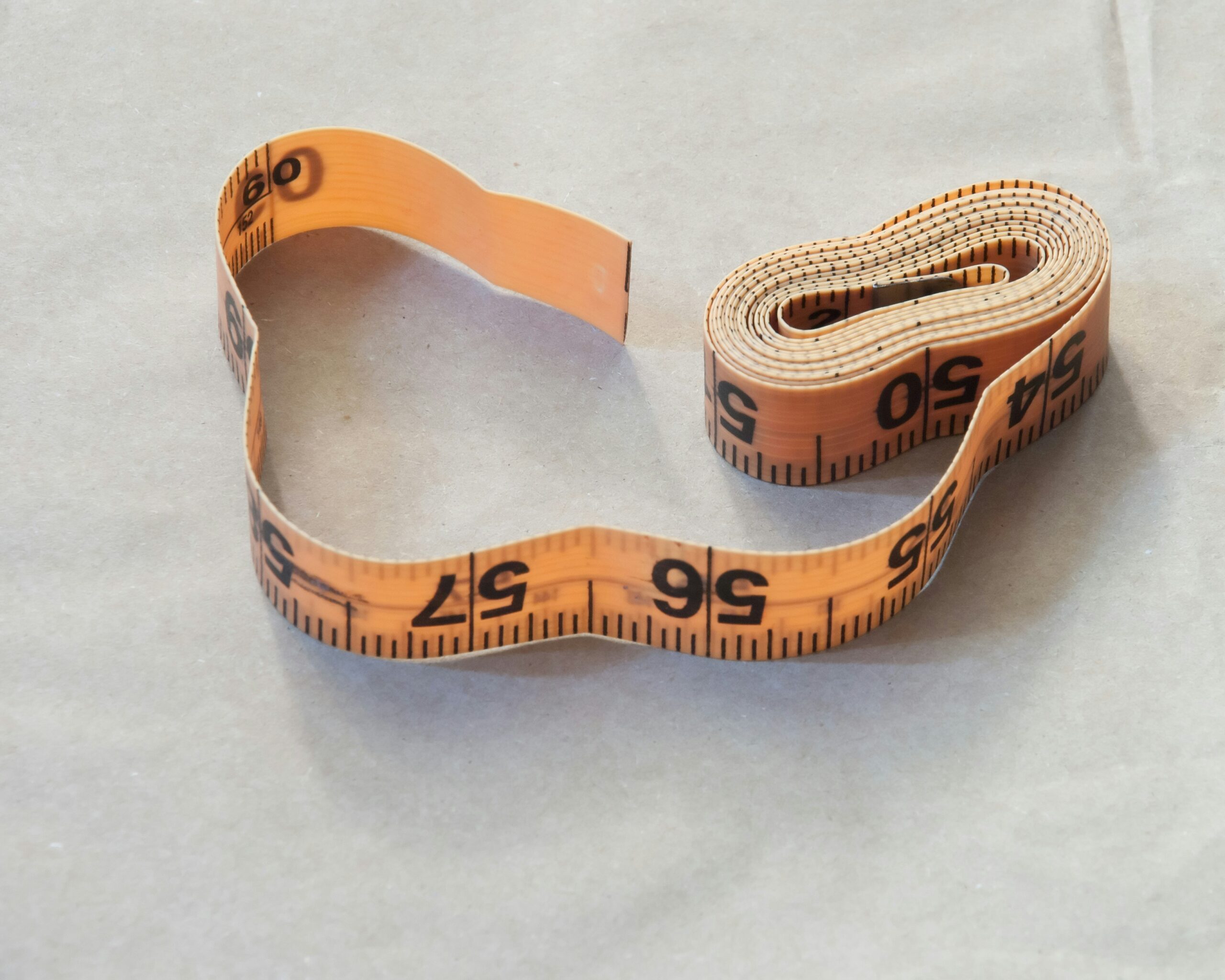
Put the paper flat and use millimeters to measure the distance between the edge and your mark.
Why use millimeters?
This won’t work with inches since they are too big. We’re talking about small changes here.
After you get that figure, look it up on a typical conversion chart. If you measure 60mm, you are about a size 9.
For accurate conversion charts, compare this data to reliable sources like the Gemological Institute of America (GIA).
Method 2: The “Secret” Ring Test
Now, the second axis is to use what you already have. This is how I recheck my work when I want to.
Stop trying to make things better if you already have a ring that fits you perfectly. Do it.
The Protocol
Get the ring that fits the finger you want to buy it for. Don’t use a ring from your left hand on your right hand; your dominant hand is usually bigger.
Find out how wide it is on the inside.
Don’t count the metal that makes up the ring in the measurement. We desire the space that is empty.
The Trap
I watched a lot of individuals measuring the ring’s outside. This isn’t fair to your finger and doesn’t make sense. The fit has nothing to do with how the outside looks. A thick silicone ring and a thin gold band may have the same inside diameter but quite different outside widths.
The Silicone Ring Nuance
Let’s discuss the gear, which is silicone rings. Who wears them and for what reason?
A big thank you to the cross-training community and everyone going crazy over QALO or Enso rings right now. No one is surprised that these have taken over the gym.
Why do people who like to work out like them? Because they are safe. They stop ring avulsion (don’t look it up if you’re queasy).
But here’s what I think about how to size them:
Should you go up or down in size?
If you are a half size (for example, 9.5), several manufacturers say you should go up a size. I perceive a significant difference in logic between these and metal rings.
Using less silicone usually works better. Why? The material stretches. A silicone ring that is loose at first will only get looser. A silicone ring that fits snugly will fit your finger.
If you are a 9.5 and buy a 10, it might feel wonderful during the warm-up. But what happens when you start to sweat? It turns into a slide. I’d rather have a snug 9 that stays in place than a 10 that I have to think about.
Weird Mistakes (Don’t Do This)
Now, let’s look at the weirdest things I see when I measure a house. These things happen every day.
How to Measure Cold?
I said this previously, but it’s worth saying again. When you are really chilly, measuring your hand gives you a false negative. Your fingers get smaller.
Disregarding the Width
I’m looking at a band that is 8mm wide and one that is 2mm wide. You can’t make me believe that they fit the same.
Wide bands cover a greater area. They squeeze more flesh. If you’re getting a big “statement” ring for the gym, you should add a quarter or half size to your size. A thin wire band that is size 10 will feel like a thick rubber band that is size 9.5.
The “Snug” Mistake
Some people believe that a ring should never leave a mark. That’s funny. They leave a mark if you wear socks. It leaves a mark if you wear a watch.
The ring won’t slip off when you shake your hand hard if it fits right. Go ahead and try it. Stand over the bed (safety first) and shake your hand as if you were attempting to dry it off. It’s too huge if the ring flies off. That’s all there is to it.
The Decision on Apps
You might wonder, “What about the apps?” Some apps let you put a ring on the screen.
I have tried them out. Some are fantastic, and some are terrible.
It’s not the app that’s the problem; it’s the screen calibration. The circle on your screen is the wrong size if your phone scale isn’t adjusted correctly.
Use an app as a backup source of information, not your main source. Any day, a paper strip or a real ruler is better than a digital screen.
In Summary
My biggest problems are with the lazy ways of doing things, like using thread, measuring cold, or guessing based on shoe size (yep, people do that).
Getting the appropriate fit is important for your comfort. It shows once more that the brand name of fitness gear isn’t everything; how well it works is.
The story of your ring’s journey from the jewelry box to the pull-up bar is one of strength. You want a ring that you don’t even think about.
You failed the measuring test if you keep twisting it, pushing it up, or worrying that it will fall off.