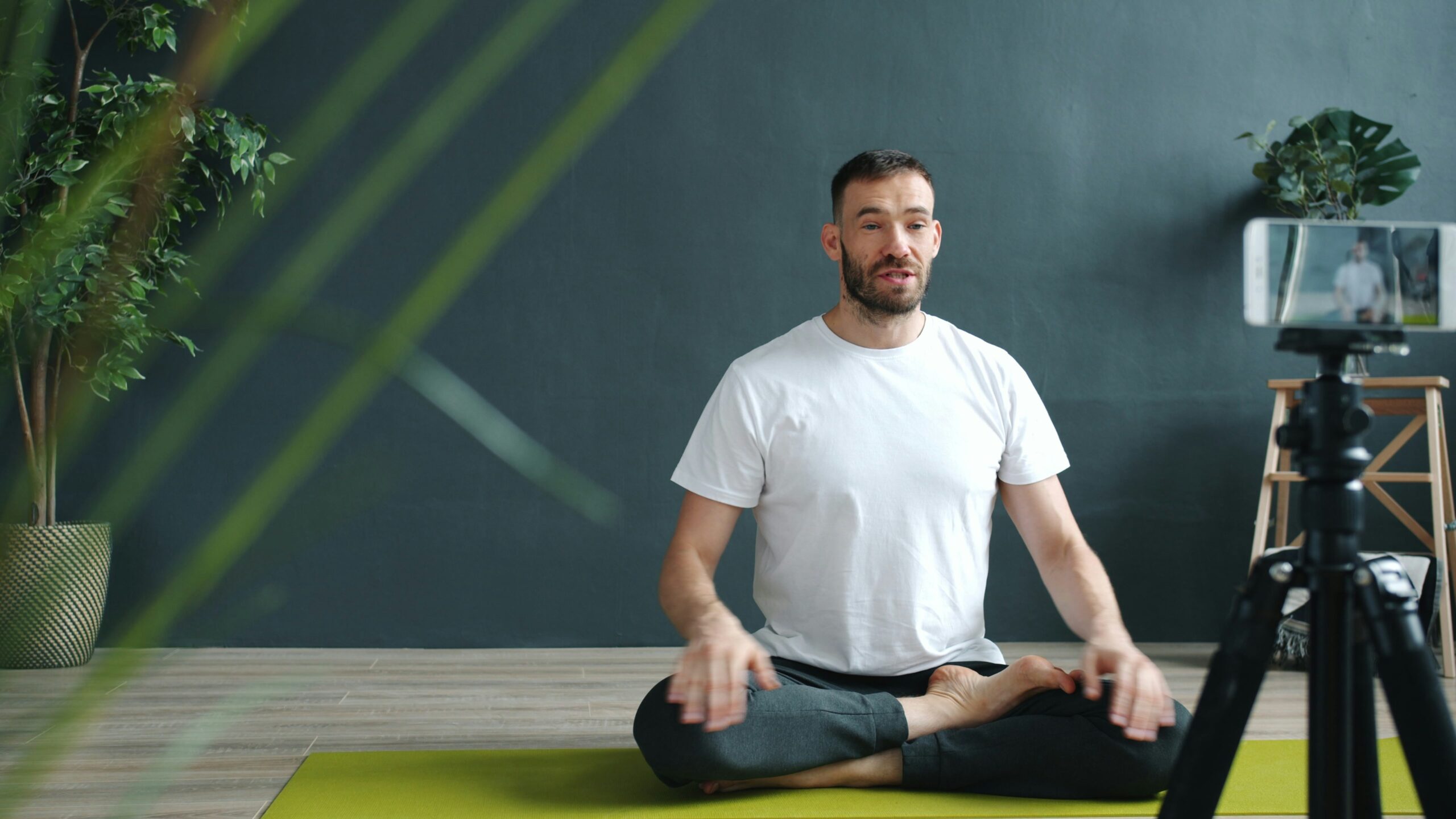
I planned to share this deep dive straight after the current fitness expo, but the industry evolves so quickly that what was true last week is now old news. So we’re publishing this right now to keep you up to date on everything that’s going on in the world of home fitness marketing.
Before we get into the details, let me remind you of what we’re going to discuss. We’ll look at the significant shift in how fitness brands use influencers. We’ll address the key question: Is the era of the “perfect body” influencer over?
We’ll also discuss the emergence of micro-influencers, the strangest tech trends we’re seeing in home workouts, and the specific strategies—such as VR and community challenges—that are currently driving sales.
The “Perfect” Body Is Out. Relatability is in
The first question I often get from brand owners and marketers is, “Why aren’t my ads converting?” I recruited the man with the six-pack!” And that’s the issue.
I believe that the era of the untouchable, god-like fitness ideal is coming to an end. Why? Let me provide the simplest proof. Scroll through TikTok or Instagram Reels right now. The videos with the most likes, comments, and shares are not those with perfect lighting and a model who appears to have never eaten a carb.
No, it’s the mother trying to fit in a workout while her toddler climbs on her back. It’s the guy in his cluttered garage, attempting to complete his final set of burpees.
We may agree or disapprove with this change, and we may label it as “lazy content.” However, the numbers do not lie. Audiences are tired of being sold a fantasy they can’t realize. They want to witness the struggle.
They want to see the sweat stains. They want to know if the person on the other side of the screen is human.
The shared struggle is part of what makes home fitness so appealing right now. Those who think “aspiration is dead” are mistaken. Aspiration has recently changed.
People no longer strive for perfection; instead, they strive for consistency in the midst of their chaotic lives.
If you are a brand and still rely on polished, magazine-quality content as your primary approach, you are missing the boat. What is the most compelling evidence? Compare the engagement rates of “get ready with me” fitness videos to carefully polished commercials. Raw, dirty, authentic stuff always wins.
Why Micro-Influencers are Crushing Giants?
Let’s begin with the other axis, the “who.” Who is actually selling products in the home fitness industry?
For years, the concept was straightforward: pay a celebrity with 5 million followers a lot of money to hold your protein powder. But let’s take a look at the reality today.
Micro-Influencers (10k – 100k followers): These creators are completely dominating the ROI game. We’re witnessing engagement rates that even the biggest stars can only dream about. I’m talking about 7% to 20% engagement with postings. That is more than simply a “hot streak,” it is real community power.
Why? Because when a micro-influencer claims a yoga mat is non-slip, you believe them. They feel like a friend. They respond to comments. They genuinely use the stuff.
Macro-influencers (500k+ followers): Yes, they increase your reach. But are they boosting sales? Frequently, their audience is so large that the “fitness” message is missed. If you’re selling a specialized home rowing machine, why pay to reach a million people who only follow the influencer for fashion advice?
Here’s the deal: the data makes it very plain. Micro-influencers drive conversions because they are trusted.
- They are not “lifestyle” gurus; rather, they are “calisthenics” experts or “post-partum recovery” specialists.
- Cost Effectiveness: You may engage 20 micro-influencers for the price of one mega-star and expect to get triple the content creation.
- Authentic Advocacy: They are usually just glad to be working with a business they enjoy, so their excitement is genuine and not fake.
In this economy, it’s wild to spend your entire budget on one celebrity. The smart money is on a group of tiny, dedicated creators.
The Rise of “Fit-Tech” Ambassadorship
Now for the second axis—the oddest and most fascinating shift: technology.
It used to be that all an influencer needed was a pair of dumbbells and a camera. Now? They must be able to provide technical support, data analysis, and VR guidance all in one.
Virtual reality (VR) Fitness:
We are witnessing a significant increase in influencers who are solely dedicated to platforms such as Supernatural or the different Meta Quest fitness apps. These are not simply “gamers.” These are fitness aficionados who burn 500 calories while playing virtual boxing.
Brands are now collaborating with creators to highlight the entire workout experience rather than just the end product. Mixed Reality (MR) films, which show the user in their living room battling virtual targets, are growing popular.
Wearable Data Integration:
Here is when things become truly fascinating. Influencers are no longer simply remarking, “This workout was hard.” The data is displayed, such as “Look at my Whoop strain score.”
- “Check my Oura ring sleep data after using this recovery tool.”
- “Here is my heart rate spike on this new bike.”
- This is the “Receipts Era” in marketing. Claims imply nothing. Data is everything. If your product promises to improve recuperation, your influencers should be able to provide evidence to back up their claims.
For me, this is the most honest type of marketing I’ve ever seen. A heart rate monitor cannot be faked (or is difficult to do so). It lends credibility in ways that a simple selfie cannot.
Community Challenges, the New Viral
Let’s talk about why content spreads. It is no longer just a hilarious video; it is a “Challenge.”
- We see this every month. A brand does not simply introduce a product; it launches a movement.
- The “30-Day Consistency” Challenge: The goal is not weight loss, but simply turning up.
The “Mile a Day” Challenge is simple, scalable, and inclusive.
Influencers are the ship’s captains. They’re not simply broadcasting; they’re hosting. They set up Discord servers, Strava groups, and secret Facebook groups where the audience may communicate with one another.
This is a key distinction. In the former paradigm, the audience focused on the influencer. In the new paradigm, the influencer facilitates the audience’s interaction with one another.
Why does this work?
Accountability. Home fitness is lonely. That is the largest impediment. Creating a digital squad solves the loneliness problem. The product, whether it is an app, a treadmill, or a set of bands, serves as the community’s admittance ticket.
I recently noticed a campaign in which the brand did not mention any of the bike’s attributes. They just talked about the “Saturday Morning Ride,” in which everyone signs on at the same time. What about the sense of belonging? That is beyond monetary value.
Long-term loyalty versus one-night stands.
Now, let’s look at the partnership model itself: how are contracts changing?
A big shoutout to the brands that realized that one sponsored post is completely ineffective. We are seeing a significant trend toward long-term ambassadorships.
The “always-on” approach:
Instead of paying an influencer for a single YouTube video, marketers now sign them for 6-12 months.
Why? Because audiences are intelligent. If I see an influencer use a supplement on Monday and then never see it again, I know they only did it for the money.
But what if I see that tub of protein on their counter in the background of all their films for six months? What if I observe them consuming it even when they’re not “promoting” it? That’s when I buy.
Co-Creation:
The smartest brands are going a step further. They’re not just providing influencers with stuff; they’re allowing them to design them.
- “Here is the [Influencer Name] Signature Yoga Mat.”
- “We built this workout mode based on [Influencer Name]’s feedback.”
This provides the influencer “skin in the game.” They are more than simply a billboard; they are a partner. They will sell those goods with 10 times more enthusiasm since they bear their name.
Video Content: Short Versus Long
The war continues—TikTok shorts versus YouTube long-form.
Here’s the truth: you need both, yet they serve different reasons.
Short-Form (TikTok, Reels, and Shorts): This is for discovery. This is where you draw attention. The trends here move quickly—trending audio, brief suggestions, and “fitness hacks.” This is top-funnel content.
Long-Form (YouTube/Podcasts): This is to ensure confidence. You cannot establish profound authority in 60 seconds. “Follow Along” workouts are gaining popularity again. People want to push play on their television and spend 45 minutes working out with the influencer.
If you’re a home fitness brand, your influencers should be in the living room, not on their phone screens. The “Follow Along” approach is the most similar to having a personal trainer. It is intimate, valuable, and results in tremendous retention.
The Hybrid Model: Gym versus Home
A few years ago, we thought gyms were extinct. When gyms reopened, we assumed home fitness was no longer viable.
What’s the truth? It is a hybrid.
Influencers are demonstrating how home equipment may supplement gym workouts. For example, “I lift heavy at the gym, but do my cardio at home on this bike.”
“I do yoga at home to recover from my gym sessions.”
This marks a significant narrative shift. You’re not trying to replace the gym; you’re attempting to improve the user’s lifestyle. Influencers who promote this “balanced” approach receive far more traction than those who declare, “Never go to a gym again.”
Conclusion
In short, my key takeaways for 2025 are authenticity and utility.
What about the glossy, immaculate aesthetic? It is on life support. What about the one-off sponsored post? Basically dead.
In this new context, the brands that embrace the roughness of real life will win out. They are the ones who collaborate with micro-influencers who know their stuff.
If you want to delve deeper into the real figures behind these trends, studies from sources like the Influencer Marketing Hub or the most recent data from Statista offer you an advantage.